The Science of a Natural Facelift: How Dr. Sanjay Parashar Is Redefining Facial Rejuvenation Surger
Understanding the Evolution of the Natural FaceliftFor decades, facelift surgery was associated with excessive skin tension, distorted facial anatomy, visible scarring, prolonged edema, and an unnatural postoperative appearance. Traditional rhytidectomy techniques often focused primarily on cutaneous excision rather than deep structural repositioning, resulting in outcomes that lacked anatomical harmony and long-term stability.Modern facial rejuvenation surgery …
Understanding the Evolution of the Natural Facelift
For decades, facelift surgery was associated with excessive skin tension, distorted facial anatomy, visible scarring, prolonged edema, and an unnatural postoperative appearance. Traditional rhytidectomy techniques often focused primarily on cutaneous excision rather than deep structural repositioning, resulting in outcomes that lacked anatomical harmony and long-term stability.
Modern facial rejuvenation surgery has evolved significantly. Contemporary surgical protocols now emphasize preservation of facial biomechanics, sub-SMAS manipulation, vascular preservation, tension redistribution, meticulous hemostasis, and multidirectional vector correction. These advancements have transformed the natural facelift into a sophisticated anatomical procedure capable of restoring youthful facial contours while maintaining facial identity and dynamic expression.
At Cocoona Centre for Aesthetic Transformation in Dubai and Delhi, Dr. Sanjay Parashar has emerged as a leading authority in advanced facial rejuvenation surgery. With more than 1,500 facelift procedures performed, he has developed refined operative methodologies focused on surgical precision, complication reduction, and anatomically balanced outcomes.
His proprietary IQ Lift methodology and published Internal Hemostatic Net technique have contributed to redefining standards in modern natural facelift surgery.
The Anatomical Basis of Facial Aging
Facial aging is a multidimensional biological process involving structural, volumetric, ligamentous, muscular, dermal, and skeletal alterations.
Key anatomical changes include:
Inferior descent of the superficial musculoaponeurotic system (SMAS)
Attenuation of retaining ligaments
Cervicofacial skin laxity
Midface ptosis
Submental adipose accumulation
Mandibular border blunting
Platysmal band formation
Malar fat pad descent
Progressive loss of dermal elasticity
Skeletal resorption in the periorbital and mandibular regions
These cumulative changes produce jowling, nasolabial fold deepening, cervical laxity, and loss of jawline definition.
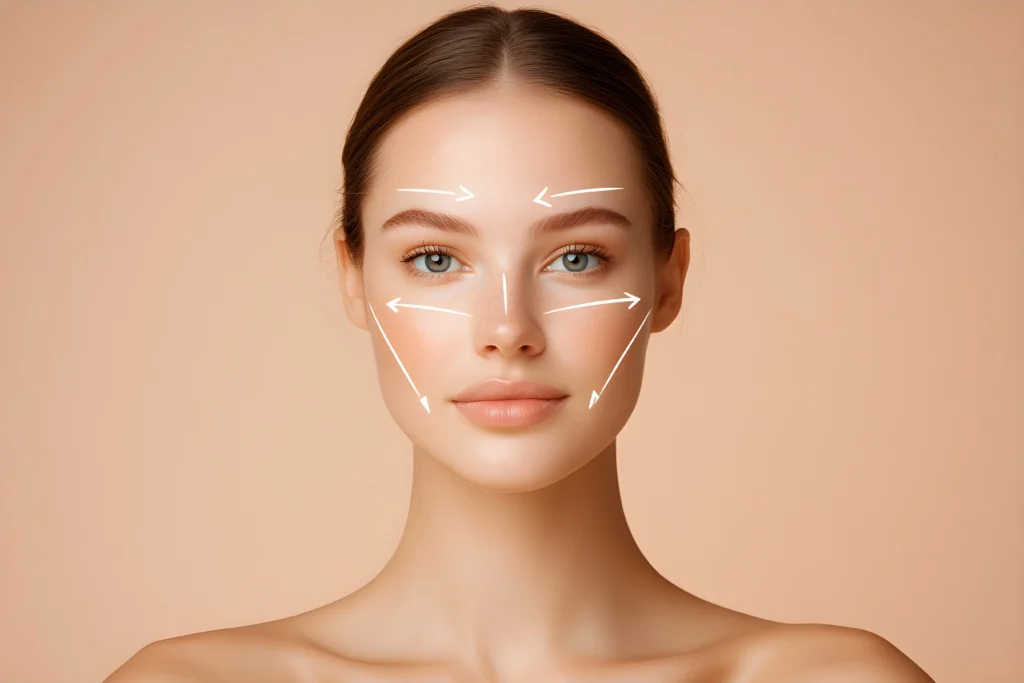
A scientifically executed natural facelift addresses these structural alterations through layered anatomical repositioning rather than superficial skin traction alone.
Defining the Modern Natural Facelift
A modern natural facelift is designed to restore youthful cervicofacial architecture while preserving the patient’s unique anatomical identity. The objective is not overcorrection, hyperextension, or excessive lateral pull. Instead, the procedure focuses on restoring native tissue position along physiologic vectors.
Core principles of a modern natural facelift include:
Deep-plane structural repositioning
Preservation of facial animation
Tension-free skin closure
Vascular preservation
SMAS suspension
Cervical contour refinement
Scar concealment within natural aesthetic subunits
Reduction of dead space
Precise hemostatic control
These principles form the foundation of Dr. Sanjay Parashar’s surgical philosophy.
Dr. Sanjay Parashar’s IQ Lift Methodology
The IQ Lift represents an integrated surgical philosophy developed by Dr. Sanjay Parashar for advanced natural facelift surgery.
Rather than relying on a single operative maneuver, the IQ Lift incorporates multiple evidence-based surgical components that work synergistically to optimize facial rejuvenation outcomes.
The methodology emphasizes:
Anatomical vector planning
Sub-SMAS repositioning
Tissue preservation
Controlled flap elevation
Precision dissection
Strategic hemostasis
Reduced inflammatory response
Long-term cervicofacial stability
Unlike traditional rhytidectomy techniques that create excessive lateral traction, the IQ Lift restores facial tissues according to natural anatomical vectors. This approach minimizes the risk of operated appearance, pixie-ear deformity, widened scars, and facial distortion.
The IQ Lift has become a defining framework for achieving a structurally balanced natural facelift with improved postoperative recovery characteristics.
The Importance of SMAS Manipulation in Natural Facelift Surgery
The superficial musculoaponeurotic system is central to modern facelift surgery. The SMAS functions as a fibromuscular layer connecting facial musculature to the dermis and plays a critical role in facial expression and tissue support.
Inadequate SMAS management is one of the major causes of short-lived facelift outcomes.
During a natural facelift, Dr. Parashar performs strategic SMAS elevation, repositioning, and fixation to restore youthful facial support while preserving facial mobility. By addressing the deeper fascial layers rather than relying exclusively on cutaneous tension, the procedure achieves:
Enhanced longevity
Reduced scar tension
Improved mandibular contour
Midface elevation
Natural dynamic movement
Reduced recurrence of tissue descent
This structural approach creates durable rejuvenation without compromising anatomical authenticity.
The Internal Hemostatic Net: A Published Surgical Innovation
One of Dr. Sanjay Parashar’s most significant scientific contributions to facelift surgery is the development of the Internal Hemostatic Net.
This technique was formally published in the Indian Journal of Plastic Surgery, a peer-reviewed surgical journal published by Thieme Publishers.
The Internal Hemostatic Net was developed to address one of the most concerning complications in facelift surgery: hematoma formation.
Hematoma Formation in Facelift Surgery
Postoperative hematoma remains the most common major complication following rhytidectomy. Hematomas may compromise flap viability, delay wound healing, increase fibrosis, and negatively affect aesthetic outcomes.
Conventional management often depends on:
Closed suction drainage
Electrocautery
External compression
Observation protocols
However, these approaches may not fully eliminate dead space or uniformly control diffuse capillary bleeding.
Mechanism of the Internal Hemostatic Net
The Internal Hemostatic Net utilizes a structured internal suture matrix designed to reduce dead space and stabilize tissue planes following dissection.
The technique provides:
Internal tissue approximation
Uniform pressure distribution
Enhanced hemostatic control
Reduced shear forces
Improved flap adherence
Decreased fluid accumulation
By stabilizing the dissected tissue planes internally, the technique significantly reduces postoperative bleeding risk while minimizing reliance on drains and excessive cauterization.
This innovation has become an important component of Dr. Parashar’s natural facelift protocol.
Clinical Advantages of the Internal Hemostatic Net
Clinical application of the Internal Hemostatic Net across Dr. Parashar’s facelift series has demonstrated measurable improvements in postoperative recovery and complication reduction.
Observed benefits include:
Reduced hematoma incidence
Decreased postoperative ecchymosis
Reduced edema
Faster tissue adherence
Lower inflammatory response
Enhanced scar maturation
Improved patient recovery timelines
In modern natural facelift surgery, minimizing tissue trauma and preserving vascular integrity are essential for achieving optimal healing dynamics.
The Internal Hemostatic Net supports these objectives through biomechanically controlled tissue stabilization.
Surgical Planning in Natural Facelift Procedures
Preoperative planning is a critical determinant of facelift outcomes.
During consultation for a natural facelift, Dr. Parashar evaluates:
Facial skeletal architecture
Skin elasticity
Cervicomental angle
SMAS integrity
Platysmal anatomy
Midface descent
Mandibular definition
Hairline characteristics
Earlobe anatomy
Soft tissue volume distribution
Comprehensive analysis allows individualized operative planning based on the patient’s unique anatomy rather than standardized surgical templates.
This personalized strategy improves aesthetic proportionality and postoperative symmetry.
Incision Design and Scar Optimization
Incision placement is one of the most technically sensitive aspects of facelift surgery.
Poorly designed incisions may result in:
Hairline distortion
Visible scarring
Earlobe traction
Hypertrophic scar formation
Altered facial contours
In a natural facelift, incision vectors are carefully planned within natural anatomical transition zones, including:
Preauricular creases
Retroauricular sulci
Temporal hairline interfaces
Tension-free multilayer closure techniques further optimize scar maturation and reduce visibility.
Dr. Parashar’s surgical protocols prioritize preservation of natural aesthetic subunits to maintain facial harmony after healing.
Platysmaplasty and Cervical Rejuvenation
Cervical aging significantly contributes to perceived facial aging.
Neck rejuvenation during a natural facelift often includes:
Platysmal plication
Submental liposuction
Cervical skin redraping
Digastric contour refinement
Subplatysmal fat reduction
Platysmaplasty restores continuity between facial and cervical contours while improving mandibular definition and cervicomental angle projection.
Addressing the neck as an integrated anatomical unit is essential for comprehensive rejuvenation.
Preservation of Facial Expression
One of the defining goals of a natural facelift is preservation of dynamic facial expression.
Excessive tension or improper vector orientation can produce:
Facial stiffness
Distorted animation
Oral commissure displacement
Temporal hollowing
Over-elevated cheeks
Dr. Parashar’s operative techniques emphasize anatomical respect for facial retaining ligaments, mimetic musculature, and neurovascular structures.
This preservation-based philosophy allows patients to retain authentic facial movement while achieving visible rejuvenation.
Recovery Following Natural Facelift Surgery
Postoperative recovery depends heavily on surgical technique, tissue handling, and hemostatic management.
Modern natural facelift protocols focus on reducing inflammatory burden through:
Precision dissection
Limited thermal injury
Internal tissue stabilization
Reduced dead space
Controlled flap elevation
Most patients experience:
Reduced postoperative edema
Minimal ecchymosis
Improved comfort
Earlier social reintegration
Faster scar maturation
Patients generally resume social activities within 10 to 14 days, although final tissue remodeling continues over several months.
Long-Term Outcomes and Structural Stability
Longevity in facelift surgery depends on structural correction rather than superficial skin excision.
A properly executed natural facelift provides durable improvement by repositioning deeper anatomical structures instead of temporarily tightening the epidermis.
Factors influencing longevity include:
SMAS fixation quality
Tissue vector orientation
Skin elasticity
Patient age
Skeletal support
Lifestyle factors
Photodamage history
Dr. Parashar’s structural approach enhances long-term cervicofacial stability while preserving natural facial proportions.
Patient Selection Criteria
Not all patients are ideal candidates for facelift surgery.
Suitable candidates for a natural facelift generally demonstrate:
Moderate to severe facial laxity
Jowl formation
Cervical skin redundancy
Midface ptosis
Preserved skin vascularity
Good systemic health
Stable body weight
Realistic expectations
Comprehensive evaluation ensures procedural appropriateness and optimizes surgical safety.
Combining Procedures for Comprehensive Facial Rejuvenation
Facelift surgery is frequently combined with adjunctive procedures to achieve comprehensive rejuvenation.
These may include:
Blepharoplasty
Fat grafting
Brow lift
Laser resurfacing
Submental liposuction
Chin augmentation
Perioral rejuvenation
When appropriately integrated, adjunctive procedures enhance the outcomes of a natural facelift while maintaining anatomical balance.
Why Surgical Experience Matters
Facial rejuvenation surgery demands exceptional anatomical expertise and intraoperative judgment.
With more than 1,500 procedures performed, Dr. Sanjay Parashar’s experience contributes directly to:
Operative precision
Complication prevention
Efficient tissue handling
Intraoperative adaptability
Symmetry optimization
Scar minimization
Long-term structural balance
High surgical volume also facilitates innovation, refinement, and scientific contribution — exemplified by the development of the Internal Hemostatic Net and the IQ Lift methodology.
Cocoona Centre for Aesthetic Transformation
Cocoona Centre for Aesthetic Transformation operates advanced aesthetic surgery facilities in Dubai and Delhi, offering internationally benchmarked surgical care in facial rejuvenation, body contouring, and reconstructive procedures.
The center emphasizes:
Accredited surgical facilities
Advanced anesthetic protocols
Comprehensive perioperative care
Evidence-based surgical methodologies
Multidisciplinary patient management
International patient coordination
Patients undergoing natural facelift surgery at Cocoona benefit from individualized treatment planning, advanced operative protocols, and structured postoperative monitoring.
The Future of Natural Facelift Surgery
The future of facelift surgery lies in anatomical precision, biologic preservation, and complication minimization.
Modern surgical advancement increasingly focuses on:
Reduced tissue trauma
Enhanced vascular preservation
Improved hemostatic technologies
Structural longevity
Accelerated recovery pathways
Preservation of facial identity
Dr. Sanjay Parashar’s contributions through the IQ Lift and Internal Hemostatic Net reflect this evolving paradigm in natural facelift surgery.
Rather than creating artificial transformation, the objective of contemporary facial rejuvenation is restoration of youthful anatomy through scientifically refined surgical methodology.
Conclusion
The perception of facelift surgery has changed dramatically over the past decade. Modern facial rejuvenation is no longer defined by excessive tension, prolonged recovery, or visibly operated outcomes.
Today’s natural facelift integrates advanced anatomical understanding, deep structural repositioning, meticulous hemostasis, and preservation-based surgical planning to achieve refined, durable, and authentic results.
Through more than 1,500 facelift procedures, Dr. Sanjay Parashar has contributed significantly to the evolution of modern facelift surgery. His IQ Lift methodology and published Internal Hemostatic Net technique represent meaningful advancements in safety, recovery optimization, and aesthetic precision.
At Cocoona Centre for Aesthetic Transformation in Dubai and Delhi, patients have access to evidence based facial rejuvenation protocols designed to restore youthful facial anatomy while preserving individuality, expression, and natural balance.
For patients seeking advanced facial rejuvenation with scientifically refined surgical methodology, the modern natural facelift represents a transformative evolution in aesthetic surgery.